Fish Care: Releasing Fish Safely

Any angler will tell you that the adrenaline you get when you get a bite on the end of your rod is unbeatable. But they’ll also say that looking after the welfare of a fish and releasing it unharmed back into the water is just as rewarding. In England and Wales, releasing fish unharmed is a legal requirement and a safe release will protect the stock, whilst also giving another angler the enjoyment of catching it.
In this article we explore our top tips on returning fish back to the water in perfect condition; plus, some essential fish care products which will make the catch easier on them and you. Follow these tips and you won’t feel like a fish out of water.
Preparation is Key
Every angler wants to catch that prize fish. Getting prepared and staying organised is the best way to look after your catch when you bring it in. From a safe space to weigh the fish to having that suitable unhooking tool close to hand; keeping the fish comfortable and safe starts with good preparation even before you cast out.
Tackle boxes, seatbox draws and fishing holdalls are all designed to keep you fishing tackle organised and protected in transit. Keeping the fishing tools and fish care equipment close to hand and in the same place means you should always know where you left it. This will help minimise the time the fish spends hooked or out of water. We also recommend keeping spare gear just in case.
Avoid Harsh Hooks
Using quality fishing hooks, rigs and tackle is essential for responsible fish care. Barbless hooks are commonly used by anglers because they are easy to remove and do less damage. If you are using a barbed hook then we recommend avoiding large barbs, and for lure fishing, single hooks are preferred to treble hooks.
When it comes to knowing how to use a disgorger or forceps to unhook a fish, we recommend doing your research and speaking to someone with experience. A friend or fellow angler will be able to give you the top tips, or you could visit our Fishing Republic team in your local GO Outdoors store. Barbless hooks are best for beginners and always wet your hands before handling any fish.
Landing a Fish
Once you feel that bite on the end of your line, bringing a fish in smoothly, safely and fairly quickly will mean it won’t exhaust itself completely. It’s important that the fish has some strength to swim away when you return it to the water. Sometimes leaving a fish submerged in the landing net for a few seconds before raising it out of the water will give it a chance to recuperate. Landing a fish safely and as quickly as possible (without rushing) will mean you can get the fish back into the water without over stressing it.
When choosing your landing net, make sure you by the right fishing net for the fish you intend to catch. Sounds simple but it’s an easy mistake to make. Do some research on the common sizes of fish you’re after and if in doubt we recommend ordering a slightly bigger net. A fish will be more comfortable if it has a little more space. Just don’t go too big as it will have a chance to escape.
Always Handle with Wet Hands
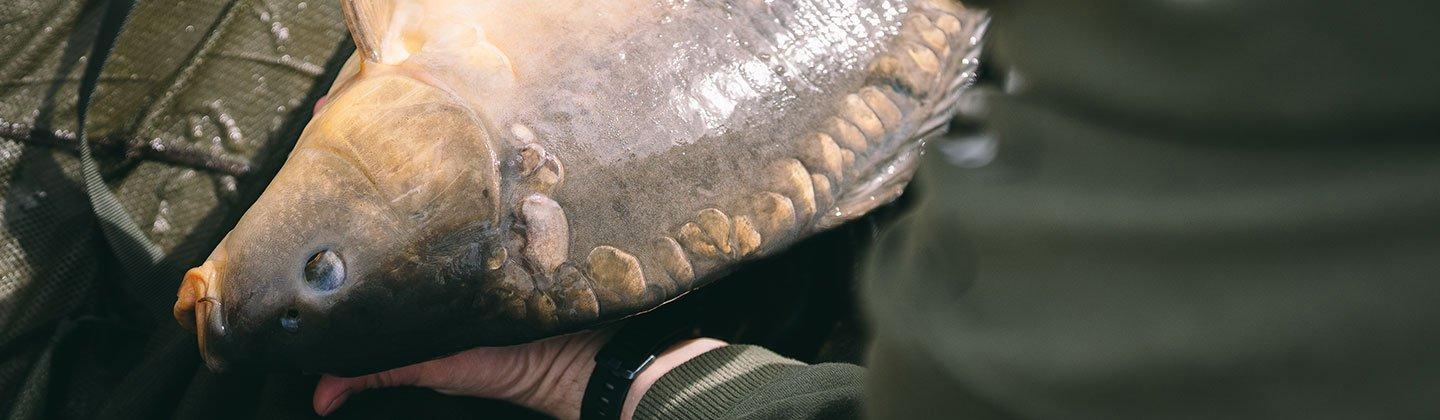
Whether you’re unhooking a fish or getting that prize catch photo, it’s so important that you always handle fish with wet hands. Remember your hands are hot and dry, and you run the risk of removing the protective slime from the fish’s body so always wet your hands first. Never hold a fish in a towel or cloth as this will remove the slime and leave it stressed; plus, possibly vulnerable to infection. When holding a fish with wet hands, ensure you have a firm hold but don’t squeeze or grasp too tightly. Treat the fish like a baby and cradle it, keeping its body horizontally in the position it would be in the water.
Keep Fish Calm and Wet
Often you’ll see anglers weighing that prize catch and taking photographs. It’s important that the fish remains calm, controlled and wet. Remember to keep your hands wet, always remain low to the ground and keep quiet. Treating the fish with respect and taking the right steps should keep the fish calm; however, if its flapping about a lot make sure you do right by the fish and don’t stress it out more.
Time really is ticking when you take a fish out of the water; but it is important not to rush as they could stress the fish or cause injury. Remain calm, be as quick as possible and if you feel the fish has been out of the water for too long we recommend giving it a gentle dunk. A submerged landing net is a great way to keep the fish close but well cared for. Also make sure your camera is charged and close to hand; just be sparing with the number of snaps you take and keep an eye on the time.
Unhooking Mats and Landing Nets
Essentials for most anglers include an unhooking mat and landing net. Some fisheries state you must have these; but we recommend taking them regardless. Unhooking is the task where the fish is most at risk so using an unhooking mat is a great option for good fish care. Remember you need to wet the unhooking mat first! Carp anglers in particular use unhooking mats due to the size of the specimens and they make unhooking and taking that perfect photograph much easier without any risk to the fish.
Another popular option is to keep the fish in the water throughout using your landing net. From the net you can simply slip the hook out and release it without ever taking it from the water. Just make sure you have a solid stance and take care near the waterside.
Kneel, Never Stand
An important thing to remember when landing a fish is to always kneel. If you drop a fish accidentally when kneeling over an unhooking mat or getting that all important photograph, its much less likely to come to any harm. However, if you’re standing up tall it has much further to fall. Another top tip is to keep your fishing spot organised and free of tripping hazards so you can move freely with no risk to the fish. There is no need to take you fish far away from the waterside; simply keep your unhooking mat close to the water’s edge.
Never Throw, Release Gently
From start to end, responsible fish care is essential. When returning a fish to the water remain kneeling and carefully place the fish back into the water; never throw or drop! During the catch fish can fight hard and exhaust themselves so may be too tired to swim off strongly straight away. Holding a fish in the water allows you to check the fish is okay and will give it a chance to gather its strength. Within seconds you’ll likely feel its fins ripple and we’re sure you’ll see it try to swim off.
If a fish is struggling, again hold the fish upright and submerged in the water. If there is a current, then face it into the current. Predator fish such as pike and trout can take a little longer to swim off so be patient and let the fish choose when its ready.
So there you have it, our top tips for returning fish back safely to the water in perfect condition. Practice makes perfect and fishing with a friend can often be the best way to learn!
Shop our extensive collection of Fishing Equipment online now or visit your local GO Outdoors store.
Shop Fishing Find Your Nearest Store